A proposal has been submitted to Ghana’s ongoing constitutional review process calling for a reduction in the minimum age required to contest the presidency, arguing that the current threshold no longer reflects modern democratic realities.
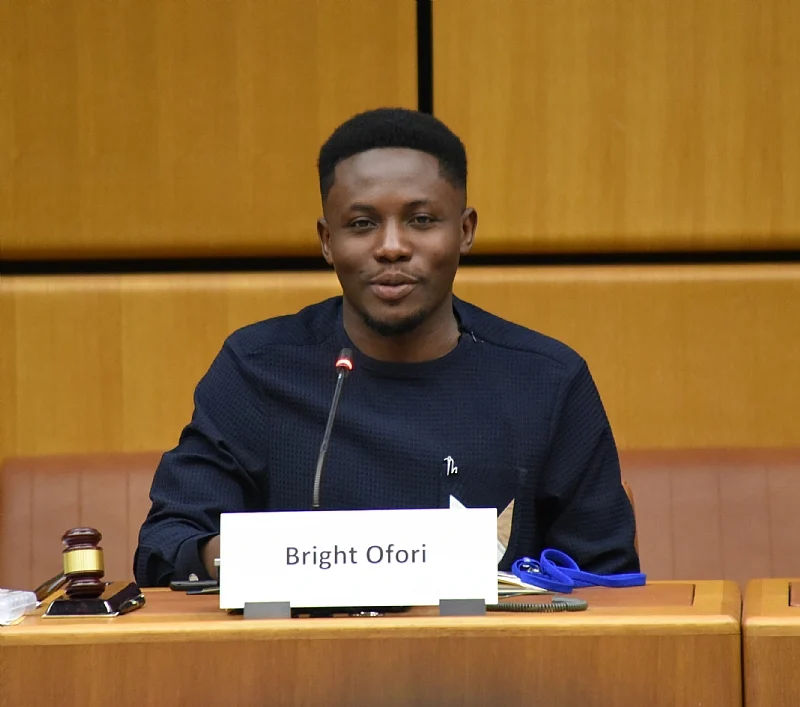
The proposal, authored by Bright Ofori, a Ghanaian citizen and Executive Director of The Bright Future Alliance, urges a review of Article 62(b) of the 1992 Constitution, which sets the minimum age for presidential eligibility at 40 years. Ofori recommends that the age be reduced to 35 years, aligning it with historical precedent, contemporary governance trends, and international youth standards .
According to the memorandum, age alone is not a reliable indicator of leadership competence. The document argues that leadership effectiveness is better assessed through experience, integrity, education, exposure, and performance rather than chronological age. It further notes that Ghana already entrusts citizens from age 18 with the sovereign power to vote, making it inconsistent to exclude capable younger citizens from being eligible for the highest office in the land .
The proposal draws heavily on Ghana’s political history to support its case. It highlights that Ghana’s 1960 Republican Constitution set the presidential eligibility age at 35. It also references key national figures such as Dr. Kwame Nkrumah, who played a leading role in Ghana’s independence struggle in his thirties, and former President Jerry John Rawlings, who first assumed national leadership at age 32. The document further notes that General Akwasi Afrifa and Colonel Ignatius Kutu Acheampong both served as Heads of State before turning 40 .
Contemporary examples are also cited. The memorandum points to recent appointments of younger individuals to senior public offices, including ministers, deputy ministers, and a member of the Council of State, as evidence that youthful leadership is already accepted within Ghana’s governance framework when competence is demonstrated .
Beyond Ghana, the proposal references regional and global trends where several countries have elected or appointed leaders in their thirties, including France, New Zealand, Austria, Finland, Ecuador, and Burkina Faso. These examples, the author argues, reinforce the position that leadership capacity is not age-bound but merit-driven .
The memorandum also addresses modern educational and professional realities, noting that many Ghanaians complete university education in their early twenties and may accumulate over a decade of professional, civic, or political experience by age 35. In sectors such as law, the military, policing, corporate leadership, and Parliament, individuals routinely assume senior responsibilities well before 40 .
The proposal recommends amending Article 62(b) to read that a person must have attained the age of 35 to qualify for election as President. It argues that such a reform would promote fairness, deepen democratic inclusion, strengthen merit-based leadership, and reduce feelings of political exclusion among young citizens, while still preserving electoral safeguards and voter choice .
The submission forms part of public inputs being considered by the Constitutional Review Committee as it evaluates possible reforms to Ghana’s 1992 Constitution.